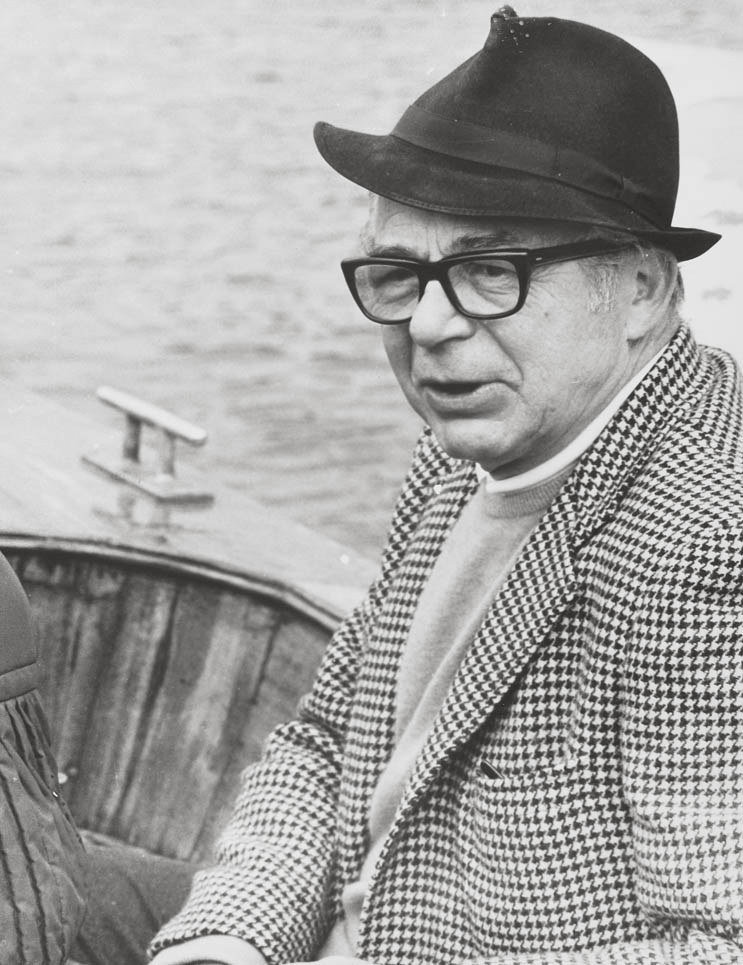
This is a narrative device allowing for a return to the past. This can be in a subjective way when it is remembered by a character, as in Rashomon (1950) by Akira Kurosawa, or in an objective way when it fits the needs of the story, as in The Killers (1946) by Robert Siodmak. Some stories start with a striking sequence that is soon shown to be the end result of a process, so after the initial episode the flash back occurs in order to explain the causes. In effect, in this case the whole story is a flashback. This can be seen in Sunset Boulevard (1950) by Billy Wilder, where the murdered screenwriter appears floating in the swimming pool of a Hollywood mansion and his voiceover begins to tell us how it all happened, and in Saving Private Ryan (1998), where a World War II veteran in a cemetery remembers an incident that begins with the Normandy landings.
One of the first audio-visual flash-backs is in the film History of a Crime (Histoire d'un crime, 1901) by Ferdinand Zecca, where the murderer condemned to death remembers -through images in the same frame in which the character appears- the events of his life that have led him to his situation.
Although the flash-back is a normal resource of any audio-visual story, it is normally more frequent in several types of thrillers
Although flash-back is a common device that can be used in any audio-visual story, it is more commonly found in different types of thriller, and in one of these, the whodunit, it is practically obligatory: an initial crime is investigated to find out who has committed it, various suspects give their alibis under questioning, producing a succession of flashbacks before a final flashback establishes the truth of what happened. This can be seen in most adaptations of the works of Agatha Christie such as And then there were none (1945) directed by René Clair. It can also be seen in any of the episodes of television series such as CSI, Maigret, Inspector Wallander and Sherlock.
Sunset Boulevard
Sunset Boulevard / Boulevard du Crépuscule | Billy Wilder, 1950, EE.UU.
Told in flashback from the point of view of a corpse floating in a swimming pool, the film tells the story of Joe Gillis, a second-rate author and screenwriter. Hounded by his creditors he randomly takes refuge in the mansion of Norma Desmond, a former silent film star who lives in a fantasy world accompanied only by her devoted servant Max. At this chance encounter, the actress wants Joe to correct a script that she has written and should mean her triumphant return to the Hollywood industry.