(Música diegética y extradiegética / Musique diégétique et musique extra diégétique)
There are two types of music in audio-visual productions. Music or sound can be "diegetic" (from the Greek word meaning "believable fictional world") when it arises from the story being told and therefore is generated or perceived by the characters. It is "non-diegetic" when it is outside the perception of the characters in a way that is designed to emphasise the emotion that the audience should be experiencing.
Diegetic music forms a natural part of the narration considering its realist nature: a character plays an instrument or listens to the radio or any reproducer. However, extra-diegetic music is accepted based on a convention which the cinema inherited from the theatre and, in general, from fiction turned into a spectacle
Given its realistic nature, diegetic music is a natural part of the narrative: a character playing an instrument or listening to the radio or any music reproduction equipment. Non-diegetic music, in contrast, is accepted due to a convention that film inherited from the theatre and in general from fiction turned into a spectacle. It is probably more developed in audio-visual productions than in any other art because it is used in all film genres, fiction and non-fiction, especially cartoons and suspense, fantasy and horror films, action films, melodramas ("melodrama" means drama with music), television quiz shows and magazines and even newsreels that in theory report objectively without seeking the added emotional effect that music provides.
In general, most films since the mid-1930s, after the arrival of sound cinema, have combined diegetic and non-diegetic music. However, some film-makers such as Robert Bresson -Pickpocket (1959)- Eric Rohmer My Night at Maud's (Ma nuit chez Maud, 1969) - José Luis Guerin -Work in Progress (En construcción, 2001) - have renounced the convention of non-diegetic music to produce something that is more realistic or to search for poetry through silence or sound effects.
Casino, by Scorsese
Casino / Casino | Federico Martin Scorsese, 1995, U.S.
Based on the true story of Frank "Lefty" Rosenthal, Anthony Spilotro and Geri McGee, Casino takes us to the troubled world of Las Vegas in the seventies. Sam "Ace" Rothstein (Robert De Niro), professional gambling handicapper linked to the mafia, is sent there to oversee the day-to-day operations of the Tangiers casino with the connivance of Senator Andy Stone. With his license still being processed, Sam becomes the de facto boss of the casino, doubling the takings almost immediately to the delight of his benefactors in the shadows. Impressed by his work, they send Sam's childhood friend and mob enforcer Nicholas "Nicky" Santoro (Joe Pesci) to protect him and the business. "Nicky", however, becomes more of a hindrance than a help and his volatile temper soon gets him banned from every casino in Las Vegas. "Nicky" decides to go it alone and gathers the rest of his gang, who come from the Midwest to help him commit jewellery thefts and murders which he always manages to get away with despite being constantly watched by the FBI. Things get even more complicated for Sam when he falls in love, marries and has a daughter with Ginger McKenna (Sharon Stone), an ambitious hustler and former prostitute unable to put her more than unstable life in order.
Movies touch our hearts and awaken our vision, and change the way we see things. They take us to other places, they open doors and minds. Movies are the memories of our life time, we need to keep them alive
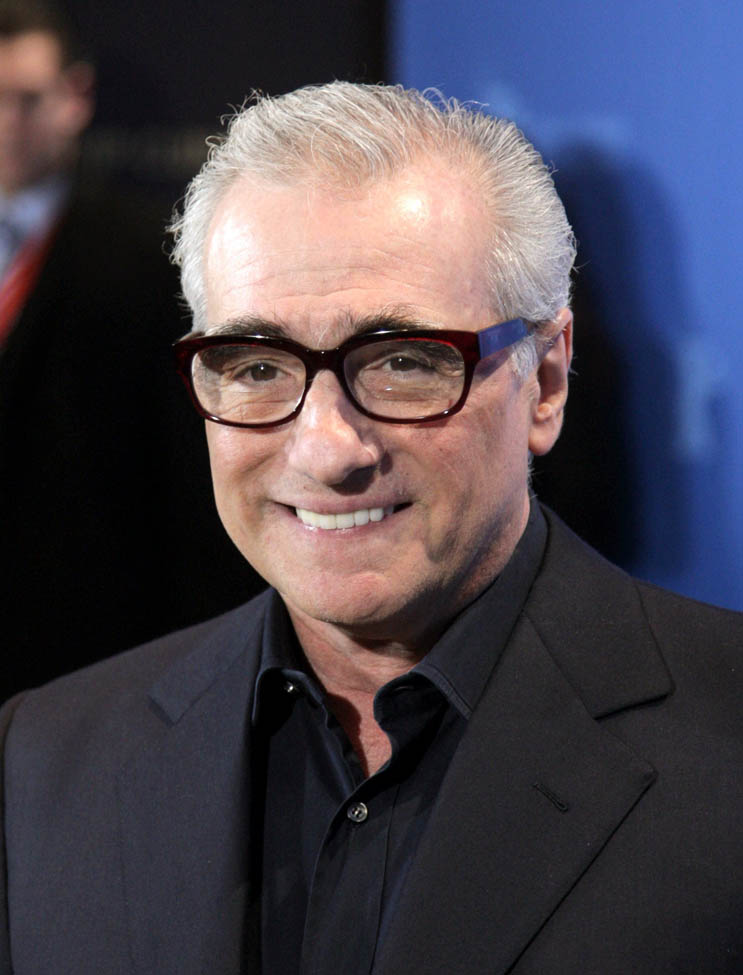
Martin Scorsese
(1942)
Director, producer, screenwriter, occasional actor, television showrunner, vocational film historian and inveterate cinephile, Scorsese was born in Queens, New York, on 17 November 1942. Son and grandson of Italian immigrants, he spent his childhood with his modest and devout Catholic family. He suffered from asthma which meant that from an early age he was unable to do the normal things for a boy his age, meaning instead that he developed an unstoppable passion for film (he was 11 when he drew his first storyboard. Although he initially studied to become a priest, he finally enrolled at New York University, obtaining his degree from the film school in 1964 and a graduate degree in the same discipline in 1966. After making several alternative short films, and undoubtedly strongly influenced by the new film trends that within a few years would end up revolutionising the increasingly ossified North American film industry, in 1967 Scorsese shot his first feature film with fellow student Harvey Keitel, Who's That Knocking at My Door?, a film that allowed him to be considered as another of the movie brats, a group which at that time included maverick filmmakers such as Francis Ford Coppola, Brian De Palma, George Lucas and Steven Spielberg. After working for the producer of B series films Roger Corman in the early 1970s, Scorsese teamed up with Robert De Niro in 1973 to film what would be his first truly personal work, the still embryonic Mean Streets. Scorsese was finally catapulted to stardom in 1976 with Taxi Driver, cult film par excellence, written with Paul Schrader and starring De Niro. This earned him his first Palme d'Or at the Cannes Film Festival and cemented his reputation from then onwards as one of the most important directors of all time. After a brief but traumatic period of personal and professional failures, Scorsese channelled all his energy into what he believed would be his last film, the monumental Raging Bull (1980), for many his undisputed masterpiece. The film did not achieve any public success, but again secured Scorsese's place on the podium of the most powerful and risky film-makers in the North American industry, just at a time when the studios were shaking up their positions after the resounding failures of the latest projects from auteurs such as Michael Cimino or Coppola himself. During the 1980s he took on projects as different and distinct from each other as The King of Comedy (1983), After Hours (1985), The Colour of Money (1986) and The Last Temptation of Christ (1988). Scorsese did not raise his head again until the release in 1990 of the extraordinary Goodfellas, considered by many as the best film about the mafia ever made. Recovering his box office draw, he made, among others, the remake of Cape Fear (1991), the sumptuous adaptation of The Age of Innocence (1993), and his new foray into gangster films, Casino (1995). The turn of the century was a particularly propitious time for him. He finally managed to film (with his now inseparable Leonardo DiCaprio) one of his most cherished projects, the mammoth Gangs of New York (2002), had a box-office blockbuster with The Aviator (2004), was honoured in 2005 with the French Legion of Honor, and after eight unsuccessful nominations he finally won the Oscar for best director which had so often eluded him, for The Departed (2006), an award presented to him by his friends Coppola, Lucas and Spielberg. On 17 January 2010 he was awarded the honorary Cecil B. DeMille Award at the Golden Globes for his "outstanding contribution to the entertainment field." In a survey conducted by Empire magazine, Scorsese was voted the third best director in history, behind only Spielberg and Hitchcock.