This is a photographic and cinematographic technique for capturing the image with different levels of sharpness for the filmed elements: a shallow depth of field focuses the sharpness in a single point, while a deep depth of field keeps in focus the elements and characters in the foreground, the middle distance and the background farthest from the camera.
Films with a deep depth of field, such as Citizen Kane (1942) by Orson Welles, favour longer shots since the action is distributed across the different depths discernible by the audience. Typically we see a combination of both options, as for example in Brazil (1985) by Terry Gilliam, with scenes of deep depth of field, such as the huge factory of workers with the director in the foreground, and of shallow depth of field in scenes such as those of the various mechanical devices operating.
The films with broad depth of field favour shots of a longer duration as the action is spread out in the different terms perceptible by the spectator
Examples of sequences with a deep depth of field are the pioneering The musketeers of Pig Alley (1912), a short film by David Wark Griffith lasting 17 minutes and with different gangster scenes ranging from the foreground to the background; the ending of The Third Man (1948), by Carol Reed, in the final long shot in the cemetery with the protagonist in the foreground and the girl moving forward from the background; and the entry of the character of Sherif Ali in Lawrence of Arabia (1962) by David Lean, with the main character Lawrence and his guide Tafas standing still in the oasis in the foreground and far in the background a black dot (Sherif Ali riding his camel) which gradually gets closer.
Hard to be a God
Hard to be a God / Il est difficile d'être un dieu | Aleksey German, 2013, Russia
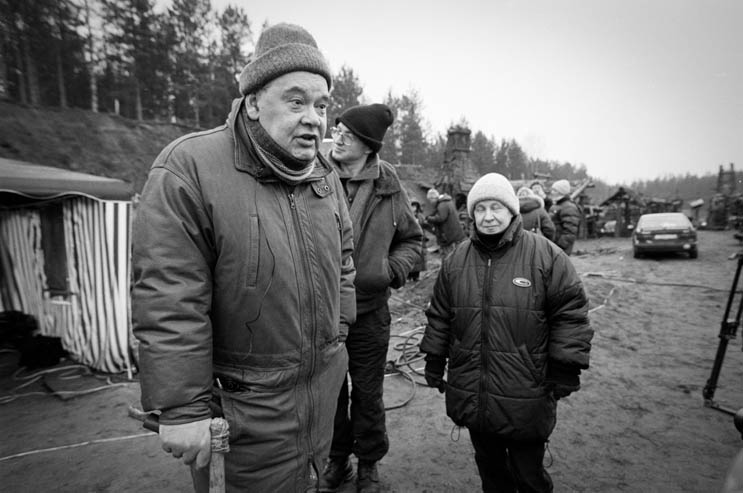
After 14 years of very complicated shooting, the last film by the outstanding Russian film-maker Aleksey German was finally released posthumously. After the death of the author in 2013, it was his wife and son who took charge of finishing off the extensive post-production and final sound editing of this hallucinatory and hypnotic adaptation of the novel of the same name by the Strugatsky brothers. The book, a classic of Soviet science fiction which German had been trying to adapt since the late 1960s, tells the story of the misadventures of Don Rumata, an interstellar traveller from a future Earth working as an impartial observer on a planet whose inhabitants are stuck in a Middle Ages very similar to the Earth one. To his despair, Rumata cannot intervene in the natural evolution of Arkanar, promoting a sort of Renaissance which leaves the current era of darkness behind, but instead must be an unemotional witness to the violent atrocities and medieval barbarism that his ignorant and cruel fellow citizens commit. As it is a project literally dragged out over a lifetime, it seems normal for the film to take to their maximum degree all these constants of German's cinema capable of making the screen a motley altarpiece riddled with scatological scenes and grotesque characterisations only comparable to the apocalyptic aesthetic universe of painters such as Bruegel the Elder and Hieronymus Bosch.